Monte Carlo is the most famous district of the Principality of Monaco, the tiny independent city-state on the French Riviera between Nice and the Italian border. Monaco has been ruled by the Grimaldi family since 1297, and in the 1850s, facing financial trouble, Prince Charles III opened a casino on a rocky plateau facing the old town. The area was renamed Monte Carlo, “Mount Charles,” in his honor in 1866, and with the arrival of the railway it quickly became a playground for European aristocrats, artists, and the wealthy. Today it remains a byword for luxury, with grand hotels, designer boutiques, yachts filling the harbor, and the streets that turn into the Formula 1 Monaco Grand Prix circuit every spring. Monaco covers only about two square kilometers, so it is easy to explore on foot, helped by a network of public lifts, escalators, and buses that link the steep streets. The nearest airport is Nice Côte d’Azur, about 30 kilometers away, connected by regular trains, buses, and a short helicopter flight, and Monaco-Monte-Carlo station is just a few minutes from the harbor. French is the official language and the euro is the currency. The best time to visit is from April to June and September to October, when the weather is warm and sunny but less crowded than in high summer; hotel prices rise sharply during the Grand Prix in late May and the Monaco Yacht Show in September.
What Are the Most Popular Areas to Visit in Monte Carlo?
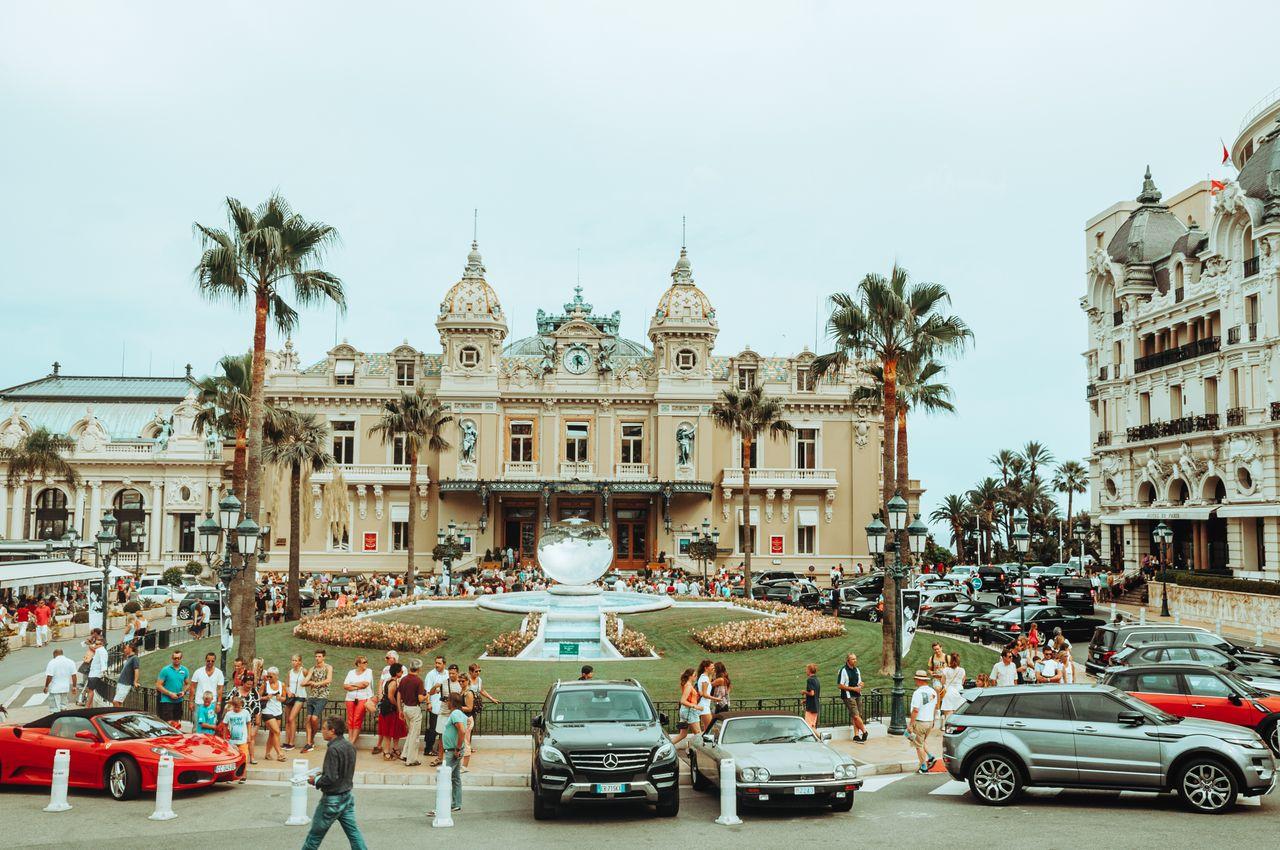
- Place du Casino: (📍 Map) The glittering center of Monte Carlo, surrounded by the Casino, the Hôtel de Paris, and the Café de Paris, where supercars line up outside and the gardens slope down toward the sea.
- Carré d’Or: (📍 Map) The “Golden Square” of luxury shopping around the casino gardens and Avenue des Beaux-Arts, home to boutiques of the world’s top fashion and jewelry houses.
- Port Hercule: (📍 Map) Monaco’s main harbor in the La Condamine district, packed with superyachts, waterfront cafés, and a lively market square, with part of the Grand Prix circuit running along its quay.
- Monaco-Ville: (📍 Map) The old town on “Le Rocher,” a rocky headland above the harbor, with narrow medieval lanes, the Prince’s Palace, the cathedral, and panoramic views over the coast.
- Larvotto: (📍 Map) Monaco’s main public beach district on the eastern side of Monte Carlo, with a renovated seafront promenade, beach clubs, and restaurants.
- Fontvieille: (📍 Map) A modern district built on land reclaimed from the sea, with a quiet marina, the Princess Grace Rose Garden, and the Louis II Stadium.
What Are the Best Products to Buy in Monte Carlo?
- Luxury Fashion and Jewelry: The boutiques of the Carré d’Or and the Métropole shopping center are among the most exclusive places on the Riviera to shop for designer clothing, watches, and jewelry.
- L’Orangerie Liqueur: A local liqueur made from the bitter oranges that grow on the trees lining Monaco’s streets, a unique taste of the principality.
- Chocolates from the Chocolaterie de Monaco: The historic chocolate maker near the Prince’s Palace, once a supplier to the royal household, known for elegant boxes of chocolates and sweets.
- Monaco Stamps and Coins: Monaco’s postage stamps and euro coins are popular with collectors, sold at the stamp and coin museum and local post offices.
- Grand Prix Memorabilia: Caps, model cars, posters, and team gear celebrating the Monaco Grand Prix and the Monte-Carlo Rally, available in shops around the harbor.
- Riviera Perfumes and Soaps: Fragrances and Provençal-style soaps from nearby Grasse and the surrounding region, a classic French Riviera souvenir.
What Are the Must-Try Foods in Monte Carlo?
- Barbagiuan: Monaco’s national dish, small fried pastries filled with Swiss chard, ricotta, rice, and Parmesan, traditionally eaten on the national day in November.
- Socca: A thin, crispy chickpea flour pancake cooked in a wood-fired oven and sprinkled with black pepper, a favorite street snack along the Riviera.
- Stocafi: A traditional Monegasque stew of dried cod slowly simmered with tomatoes, olives, garlic, and white wine.
- Pissaladière: A savory tart topped with slow-cooked onions, anchovies, and black olives, found in bakeries across Monaco and Nice.
- Fougasse Monégasque: A sweet flat bread flavored with orange blossom water and decorated with almonds and colorful aniseed sprinkles in Monaco’s red and white.
- Fine Dining: Monte Carlo is home to several Michelin-starred restaurants, including Le Louis XV by Alain Ducasse at the Hôtel de Paris, celebrated for its refined Riviera cuisine.
What Are the Best Historical Places to Visit in Monte Carlo?
- Casino de Monte-Carlo: (📍 Map · 🎟️ Tickets & Tours) The legendary Belle Époque casino, completed in its present form by Charles Garnier, architect of the Paris Opera, with gilded gaming rooms, frescoes, and stained glass; visitors can tour the building during the day.
- Opéra de Monte-Carlo: (📍 Map · 🎟️ Tickets & Tours) The Salle Garnier, an ornate opera house built inside the casino complex in 1879, which has hosted world premieres by composers such as Puccini and Ravel.
- Hôtel de Paris: (📍 Map · 🎟️ Tickets & Tours) The grand hotel opened in 1864 on Place du Casino, which has welcomed royalty, writers, and film stars for over 150 years.
- Prince’s Palace of Monaco: (📍 Map · 🎟️ Tickets & Tours) The official residence of the Grimaldi family, a fortress dating back to the 13th century, where the changing of the guard takes place every day just before noon.
- Monaco Cathedral: (📍 Map · 🎟️ Tickets & Tours) The white stone Romanesque-Revival Cathedral of Our Lady Immaculate in Monaco-Ville, where Princess Grace and Prince Rainier III are buried.
- Oceanographic Museum: (📍 Map · 🎟️ Tickets & Tours) A monumental museum built into the cliffs of Le Rocher, founded by Prince Albert I in 1910 and once directed by Jacques-Yves Cousteau, with a famous aquarium and rooftop views.
- Jardin Exotique: (📍 Map · 🎟️ Tickets & Tours) A clifftop botanical garden with thousands of cacti and succulents, and spectacular views over the whole principality.
Whether you're admiring the gilded halls of the Casino de Monte-Carlo, watching the yachts glide into Port Hercule, wandering the medieval lanes of Monaco-Ville, or tasting warm barbagiuans by the harbor, Monte Carlo offers a unique blend of history, glamour, and Mediterranean beauty in one of the smallest countries in the world.