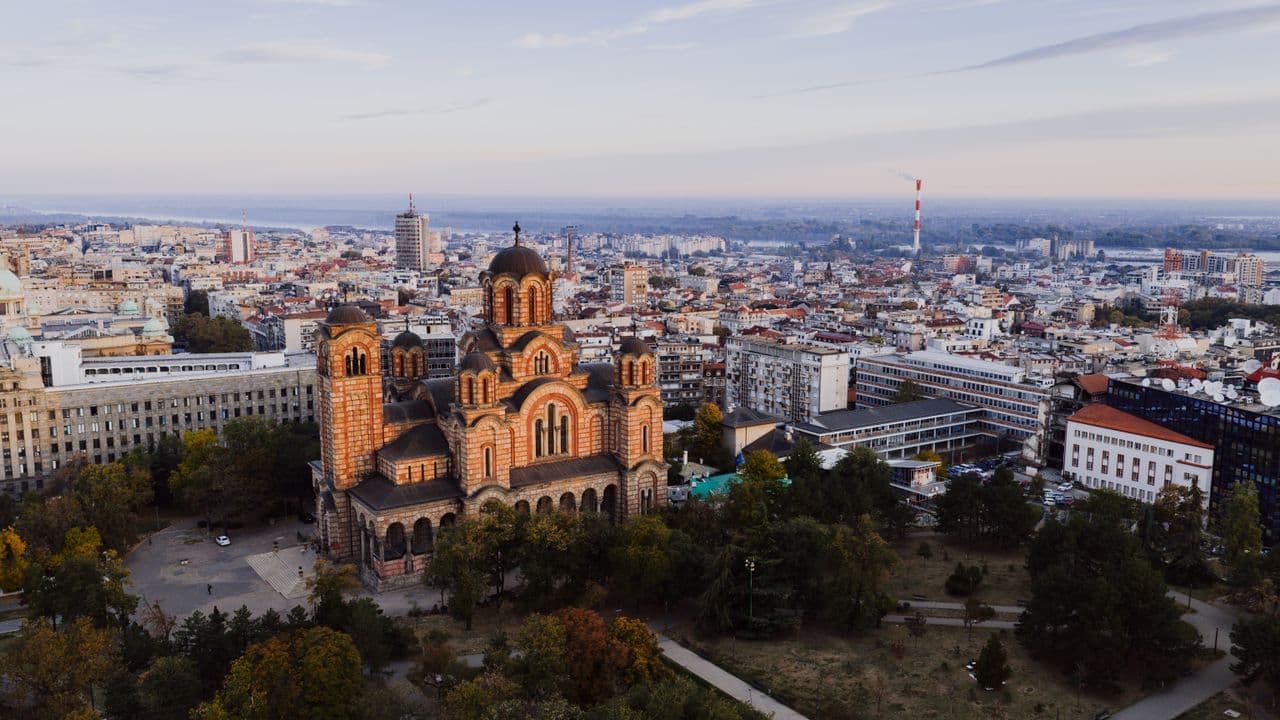
Belgrade, known in Serbian as Beograd, meaning "White City," is the capital and largest city of Serbia, standing where the Sava River flows into the Danube. It is one of the oldest continuously inhabited cities in Europe, first settled by Celtic tribes and later fortified by the Romans as Singidunum. Over the centuries it was fought over by Byzantines, Hungarians, Ottomans, and Austrians, and it is said to have been destroyed and rebuilt dozens of times, leaving behind a fascinating mix of Ottoman, Austro-Hungarian, Yugoslav, and modern architecture. Today Belgrade is known for its warm hospitality, hearty food, café culture, and some of the liveliest nightlife in Europe. Belgrade Nikola Tesla Airport is about 18 kilometers from the city center, and buses, trams, and affordable taxis make getting around easy, while most central sights can be explored on foot. The best time to visit is from April to June and September to October, when the weather is pleasant for walking and sitting by the rivers; summers can be hot, and winters are cold but atmospheric, with festive markets in December.
Popular Areas in Belgrade
- Stari Grad (Old Town): (📍 Map) The historic heart of the city, home to Kalemegdan Park, Republic Square, the National Museum, and many of Belgrade’s most important landmarks.
- Knez Mihailova Street: (📍 Map) Belgrade’s main pedestrian street, lined with elegant 19th-century buildings, shops, cafés, and street performers, leading straight to Kalemegdan.
- Skadarlija: (📍 Map) The city’s bohemian quarter, a cobbled street of old taverns, or kafanas, where traditional musicians play at the tables and artists and poets once gathered.
- Zemun: (📍 Map) Once a separate town on the border of the Austro-Hungarian Empire, with a charming riverside promenade, fish restaurants, and narrow streets climbing to the Gardoš Tower.
- Savamala and Belgrade Waterfront: (📍 Map) A riverside district along the Sava that has transformed from an old industrial area into a hub of bars, cultural spaces, and modern promenades.
- Dorćol: (📍 Map) A historic neighborhood stretching down toward the Danube, popular for its trendy cafés, craft beer bars, galleries, and relaxed local atmosphere.
- Ada Ciganlija: (📍 Map) A river island turned lake beach, nicknamed the "Sea of Belgrade," where locals swim, cycle, and play sports throughout the summer.
Popular Products from Belgrade
- Rakija: Serbia’s beloved fruit brandy, most famously šljivovica made from plums, often sold in decorative bottles and offered to guests as a sign of welcome.
- Ajvar: A rich spread of roasted red peppers and sometimes eggplant, a staple of Serbian kitchens and a delicious edible souvenir.
- Opanci: Traditional Serbian leather shoes with distinctive curled toes, sold in full size or as small decorative keepsakes.
- Pirot Kilim: Handwoven wool rugs with colorful geometric patterns, a traditional Serbian craft with a history of several centuries.
- Orthodox Icons: Hand-painted religious icons and church art, reflecting the deep roots of the Serbian Orthodox tradition.
- Serbian Wine: Reds and whites from regions such as Fruška Gora, Šumadija, and Negotin, including wines from local grapes like Prokupac.
Must-Try Foods in Belgrade
- Ćevapi: Small grilled minced-meat sausages served in soft lepinja bread with chopped onions and kajmak, a true Balkan classic.
- Pljeskavica: A large, juicy grilled meat patty, often called the Balkan burger, served with salads and spreads on fresh flatbread.
- Karađorđeva Šnicla: A rolled, breaded veal or pork steak stuffed with kajmak, created in Belgrade and named after the leader of the First Serbian Uprising.
- Sarma: Cabbage leaves stuffed with minced meat and rice, slowly cooked with smoked meat, especially popular in winter.
- Burek: Flaky pastry filled with meat, cheese, or spinach, the city’s favorite breakfast, traditionally eaten with a glass of yogurt.
- Gibanica and Kajmak: A layered cheese pie made with phyllo pastry, and the creamy dairy spread kajmak that accompanies many Serbian dishes.
Special Historical Places in Belgrade
- Belgrade Fortress (Kalemegdan): (📍 Map · 🎟️ Tickets & Tours) The city’s most iconic landmark, a fortress with layers of Roman, Byzantine, Serbian, Ottoman, and Austrian history, overlooking the confluence of the Sava and Danube and surrounded by a beautiful park.
- Temple of Saint Sava: (📍 Map · 🎟️ Tickets & Tours) One of the largest Orthodox churches in the world, with a vast white dome and a breathtaking golden mosaic interior.
- Pobednik (The Victor): (📍 Map · 🎟️ Tickets & Tours) A famous monument standing on a tall column inside the fortress, built to commemorate Serbia’s victories in the Balkan Wars and World War I and a symbol of Belgrade.
- House of Flowers: (📍 Map · 🎟️ Tickets & Tours) The mausoleum of Josip Broz Tito, part of the Museum of Yugoslavia, offering a fascinating look into the history of the former Yugoslav state.
- Nikola Tesla Museum: (📍 Map · 🎟️ Tickets & Tours) A museum dedicated to the brilliant inventor, displaying his personal belongings, working models of his inventions, and the urn containing his ashes.
- Gardoš Tower: (📍 Map · 🎟️ Tickets & Tours) Also known as the Millennium Tower, built in 1896 on a hill in Zemun to celebrate a thousand years of Hungarian settlement, with panoramic views of the Danube and the city.
Whether you're watching the sunset over two rivers from the walls of Kalemegdan, listening to traditional music in a Skadarlija kafana, enjoying grilled ćevapi by the Danube, or dancing until dawn on a floating river club, Belgrade offers a bold and unforgettable mix of history, flavor, and nonstop energy.