Laos, officially the Lao People’s Democratic Republic, is the only landlocked country in Southeast Asia, bordered by China, Vietnam, Cambodia, Thailand, and Myanmar. The Mekong River runs along much of its length and has shaped its towns, trade, and culture for centuries. In 1353 the kingdom of Lan Xang, “the Land of a Million Elephants,” was founded here with Luang Prabang as its royal capital, and Theravada Buddhism became the heart of Lao life. Later the region came under Siamese influence and, from the late 19th century, French rule as part of French Indochina, which left behind colonial villas, bakeries, and wide boulevards. Laos gained full independence in 1953, and today it is known for its saffron-robed monks, golden temples, dramatic karst landscapes, and relaxed, friendly atmosphere. The main international gateways are Wattay International Airport in Vientiane and Luang Prabang International Airport, and the Laos–China Railway now links Vientiane, Vang Vieng, and Luang Prabang with fast modern trains. Lao is the official language and the currency is the Lao kip, although Thai baht and US dollars are sometimes accepted in tourist areas. The best time to visit is the cool, dry season from November to February; March to May is very hot, while the rainy season from June to October brings lush green scenery and fewer visitors.
What Are the Most Popular Areas to Visit in Laos?
- Luang Prabang: (📍 Map) The former royal capital and a UNESCO World Heritage town on a peninsula between the Mekong and Nam Khan rivers, filled with temples, French colonial houses, a lively night market, the dawn alms-giving ceremony of the monks, and the turquoise pools of nearby Kuang Si Falls.
- Vientiane: (📍 Map) The laid-back capital on the banks of the Mekong, with golden stupas, French-era boulevards, riverside sunset promenades, and a growing café scene.
- Vang Vieng: (📍 Map) A small town surrounded by towering limestone karsts, famous for river tubing, kayaking, caves, blue lagoons, and hot air balloon rides over the Nam Song River.
- Si Phan Don (4,000 Islands): (📍 Map) A scattering of river islands in the far south where the Mekong spreads wide, perfect for hammock days, cycling, and spotting the rare Irrawaddy dolphins.
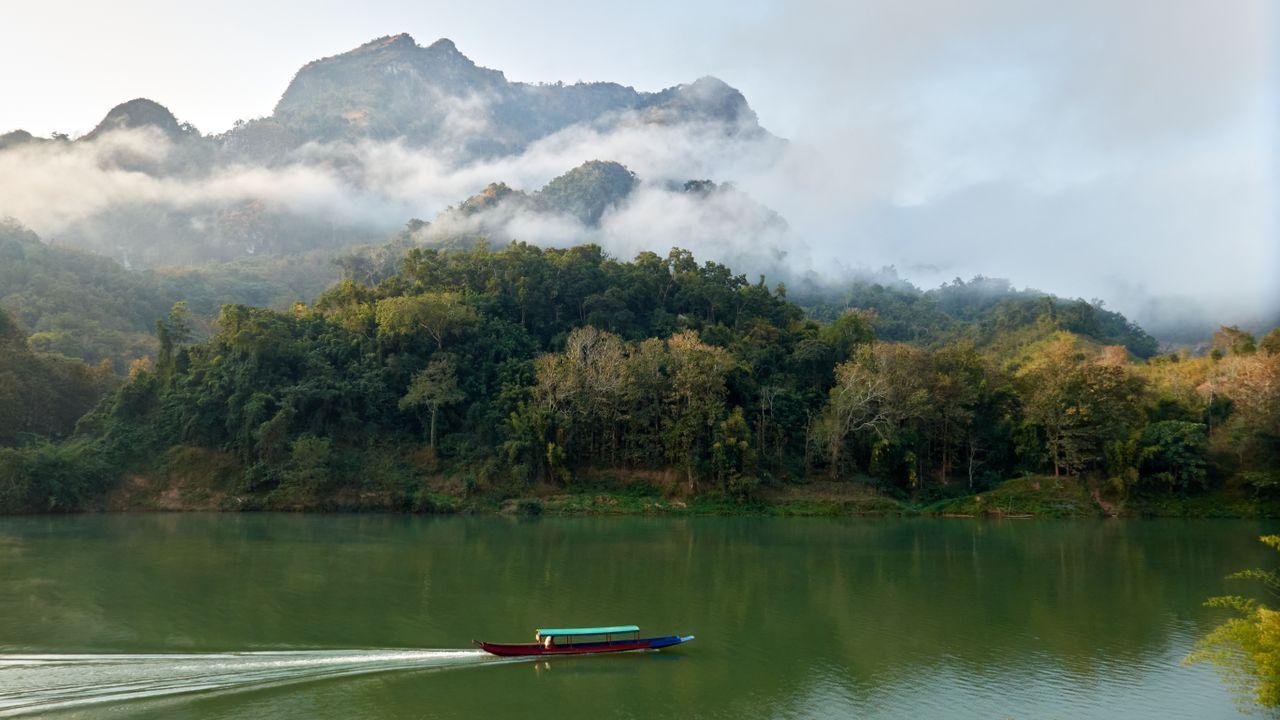
- Nong Khiaw: (📍 Map) A peaceful village on the Nam Ou River in the north, surrounded by jungle-covered peaks, with excellent viewpoints, treks, and boat trips to remote villages.
- Bolaven Plateau: (📍 Map) A cool highland region in southern Laos dotted with coffee plantations, waterfalls such as Tad Fane and Tad Yuang, and ethnic minority villages.
What Are the Best Products to Buy in Laos?
- Lao Silk and Textiles: Hand-woven silk scarves and traditional sinh skirts with intricate patterns, made by village weavers and sold in the markets of Luang Prabang and Vientiane.
- Lao Coffee: Robusta and Arabica beans grown on the Bolaven Plateau, prized for their rich, smooth flavor and a favorite edible souvenir.
- Saa Paper Products: Notebooks, lanterns, and cards made from handmade mulberry bark paper, often decorated with pressed flowers, especially in Luang Prabang.
- Silver Jewelry: Bracelets, earrings, and ornaments crafted by Hmong and other hill tribe artisans, featuring traditional designs.
- Lao Lao and Beerlao: Lao Lao is a strong local rice whisky, while Beerlao is the country’s beloved national beer, and branded T-shirts are a classic souvenir.
- Handicrafts: Carved wooden Buddhas, bamboo baskets, and embroidered bags from the Luang Prabang Night Market and Vientiane’s Talat Sao (Morning Market).
What Are the Must-Try Foods in Laos?
- Laap (Larb): The national dish of Laos, a minced meat or fish salad mixed with fresh herbs, lime juice, fish sauce, chili, and toasted ground rice.
- Sticky Rice (Khao Niao): The staple of every Lao meal, served in small woven bamboo baskets and eaten by hand, rolled into balls and dipped into sauces.
- Tam Mak Hoong: The Lao version of green papaya salad, spicy and pungent with fermented fish sauce called padaek.
- Khao Piak Sen: A comforting noodle soup with thick, chewy rice noodles in a rich chicken broth, topped with fried garlic and herbs, a popular breakfast.
- Or Lam: A traditional stew from Luang Prabang made with meat, eggplant, herbs, and peppery sakhan wood, which gives a unique numbing spice.
- Khao Jee: A legacy of the French era, crusty baguette sandwiches filled with pâté, vegetables, herbs, and chili sauce, sold on street corners across the country.
What Are the Best Historical Places to Visit in Laos?
- Wat Xieng Thong: (📍 Map · 🎟️ Tickets & Tours) Built in 1560, this temple in Luang Prabang is one of the finest examples of Lao architecture, with sweeping tiered roofs and a glittering “Tree of Life” glass mosaic.
- Pha That Luang: (📍 Map · 🎟️ Tickets & Tours) The great golden stupa in Vientiane and the national symbol of Laos, believed to have been founded centuries ago and rebuilt in the 16th century by King Setthathirath.
- Plain of Jars: (📍 Map · 🎟️ Tickets & Tours) A mysterious UNESCO World Heritage landscape near Phonsavan, scattered with thousands of ancient stone jars dating back as far as 2,000 years or more.
- Vat Phou: (📍 Map · 🎟️ Tickets & Tours) A UNESCO-listed Khmer temple complex near Champasak in the south, older than Angkor Wat, set on a mountainside with stunning views of the Mekong plain.
- Royal Palace Museum: (📍 Map · 🎟️ Tickets & Tours) The former royal residence in Luang Prabang, built in 1904, now showing royal treasures, along with the revered Haw Pha Bang shrine in its grounds.
- Patuxai: (📍 Map · 🎟️ Tickets & Tours) Vientiane’s victory monument, inspired by the Arc de Triomphe but decorated with Lao motifs, with panoramic views from its top.
- Pak Ou Caves: (📍 Map · 🎟️ Tickets & Tours) Two caves in the cliffs above the Mekong near Luang Prabang, filled with thousands of Buddha statues left by pilgrims over the centuries.
Whether you're watching the monks’ dawn procession in Luang Prabang, swimming in the turquoise pools of Kuang Si Falls, drifting down the Mekong past limestone cliffs, or sharing sticky rice and laap at a riverside table, Laos offers a unique blend of history, spirituality, and natural beauty at a gentle, unhurried pace.